If you’re thinking about building a deck in your garden, there’s a good chance you’re wondering:
“How much will it actually cost?”
It’s one of the most common questions we get at Atlantes Landscapes—and it’s a fair one. But the honest answer is: it depends. The final price of a deck can vary quite a bit depending on your garden, your needs, and the decisions you make along the way.
So instead of giving you a generic number (that may or may not apply to your project), we think it’s more helpful to walk you through the key factors that influence the cost of building a garden deck. That way, you can understand what drives the price up—or down—and make smarter decisions for your space and your budget.
1. Your Garden’s Topography: Is It Flat or Sloped?
Let’s start with the ground itself.
If your garden is flat and accessible, you’re in luck—that’s the most cost-effective base for a decking project. But if the area is on a slope, uneven, or has poor drainage, that’s going to increase the amount of groundwork needed.
Sometimes this means digging out earth, installing retaining structures, or even building a raised frame. It’s not a problem (we do this all the time), but it does affect the time, materials, and overall cost.
2. The Design: Simplicity vs Custom Features
This one’s big.
The more custom the design, the more time and skill it takes to build. A basic square or rectangular deck is always going to cost less than one with curves, levels, built-in seating, steps, or lighting.
But don’t let that scare you. If you’re planning to spend a lot of time out there—or you want the deck to be a true extension of your home—then investing in those custom features can really pay off in the long run.
3. Materials: What’s the Deck Made Of?
Your choice of material has one of the biggest impacts on cost—not just during installation, but over the life of your deck. So let’s walk through the main options we offer, including one we’re often asked about: Millboard.
Softwood Decking
Softwood (typically treated pine or spruce) is the most budget-friendly option. It’s easy to work with and looks great when freshly installed, but it requires regular staining and sealing to protect against moisture, rot, and fading. Over time, the ongoing maintenance can add up in cost and effort.
Hardwood Decking
Hardwood species like oak, ipe or aroko offer rich colour, beautiful grain, and excellent durability. It’s a higher-end option that ages well—but it’s more expensive upfront, and some types require oiling to maintain their finish. Still, for many homeowners, the natural beauty is well worth it.
Composite Decking
Composite decking is made from a mix of recycled wood fibres and plastic, offering low-maintenance performance with a natural wood look. It resists warping, cracking, and fading much better than timber—and you won’t need to sand, stain, or seal it each year.

Millboard Decking
Millboard is a premium composite decking material that deserves its own spotlight.
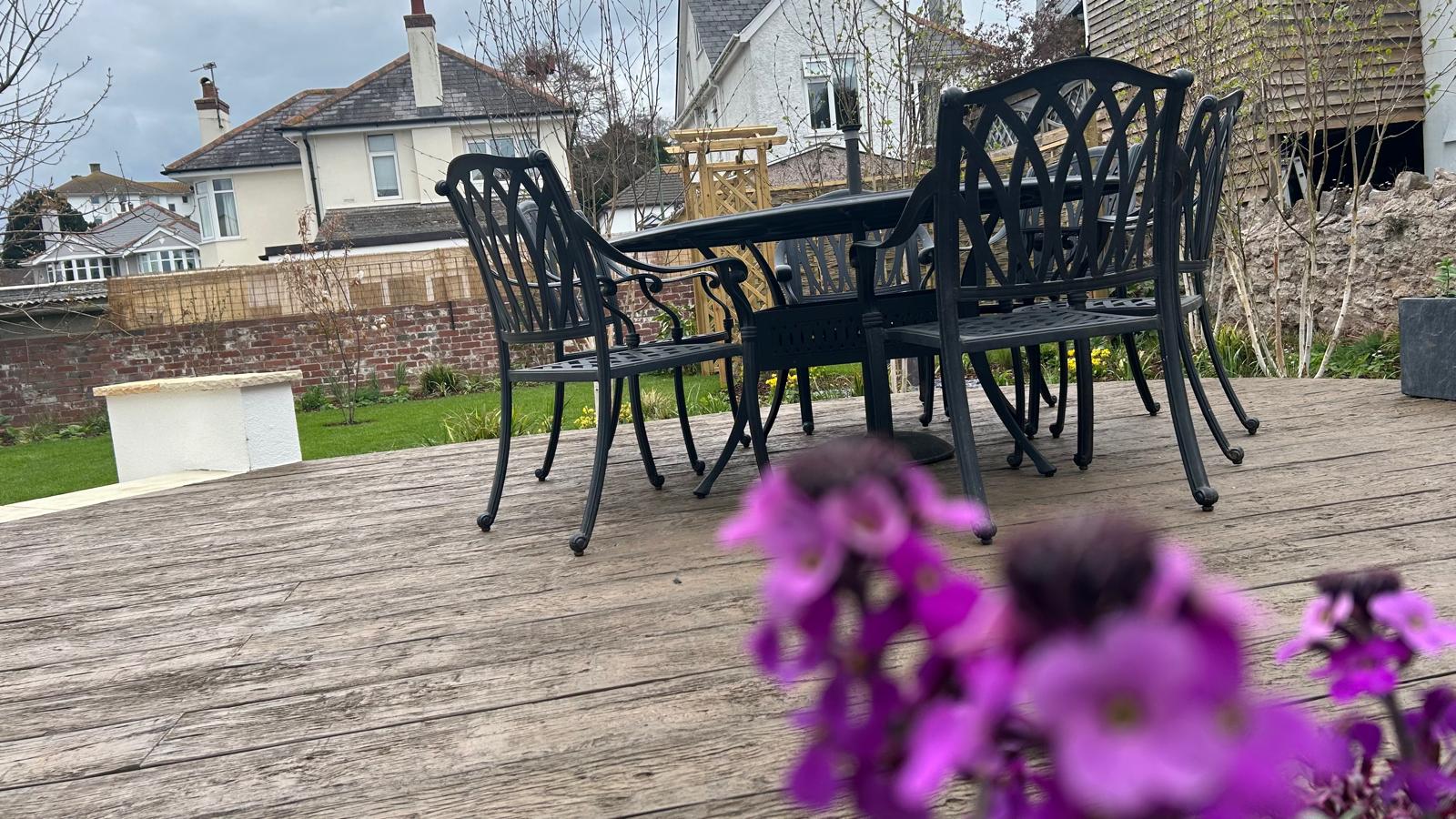
Unlike most composites, Millboard is not made with wood fibres at all. Instead, it’s crafted from a unique polyurethane resin blend reinforced with mineral fibres and finished with a durable, hand-moulded Lastane® surface layer.
Here’s why it matters:
- Zero timber content means it won’t rot, splinter, or warp—even in wet conditions.
- The surface is non-slip and highly UV-resistant, making it safe and long-lasting.
- It’s moulded from real oak boards, so it captures the authentic grain and texture of natural wood—without the upkeep.
Millboard is ideal for high-end garden designs or coastal properties where weather resistance is critical. While it does come at a higher price point, many of our clients see it as an investment in beauty, durability, and peace of mind.
4. Site Access: Can We Actually Get In?
This is a surprisingly common issue. If your garden is easy to access with tools and materials, great. But if we’re navigating narrow passageways, steps, or restricted parking, it takes longer to get materials in—and waste out. That adds to the overall labour cost.
Also, if there are old patios, fences, or trees that need removing before we build, we’ll need to factor that in too.
5. Finishing Touches: Lights, Railings, Privacy Screens
These features are the cherry on top—but they do impact the budget.
Do you want LED lighting along the steps? A handrail for safety? A privacy screen for neighbours? These are all worth considering early in the planning process because they affect how we design the deck (and price the job).
We’ll never push extras you don’t need. But we’ll always talk them through with you so you can decide what’s important to you now—and what might be worth adding later.
6. Maintenance: Think Beyond the Installation
Some people think composite decking is expensive—until they realise they’ll never have to oil it, seal it, or worry about rot or splinters. Others are happy to maintain a softwood deck themselves each year to save on cost.
There’s no right or wrong choice here—it’s about what fits your lifestyle. We’ll give you honest advice on the long-term care needed for each material so you’re not caught off guard down the road.
Bonus: Do You Need Planning Permission?
In many UK gardens, decking can be built without planning permission—as long as it’s under 30cm high and doesn’t cover more than 50% of your garden.
But if you live in a listed property or conservation area, or you’re building a raised structure, there could be extra permissions involved. We always check these details with you upfront to avoid nasty surprises.
So… What Will Your Deck Cost?
We know: it’s tempting to skip to the number. But after reading this, you now understand why two identical-sized decks can cost totally different amounts depending on where, how, and with what they’re built.
At Atlantes Landscapes, we offer bespoke decking solutions across Devon, in Exeter, Honiton, Torquay, Crediton, Exmouth and surrounding areas. Our experienced team is fully certified, fully insured, and dedicated to giving you straight answers—so you can make informed decisions without pressure.
Ready to Talk About Your Decking Project?
If you’re considering building a deck and want a tailored quote—or just need advice—get in touch. We can visit your garden, talk through your ideas, and help you work out the best solution for your space and your budget.